 Image 1 of 2
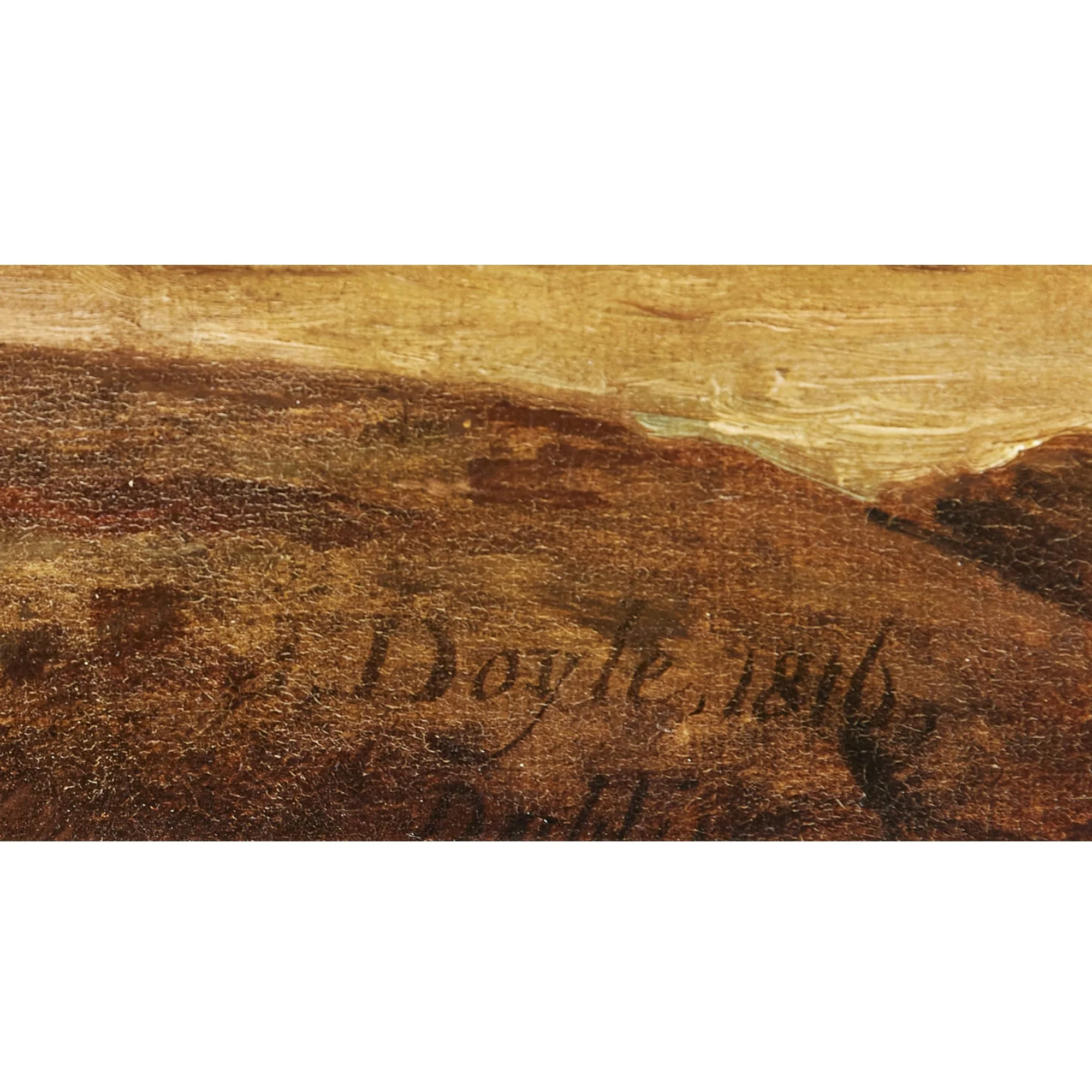 Image 2 of 2
€ Enquire
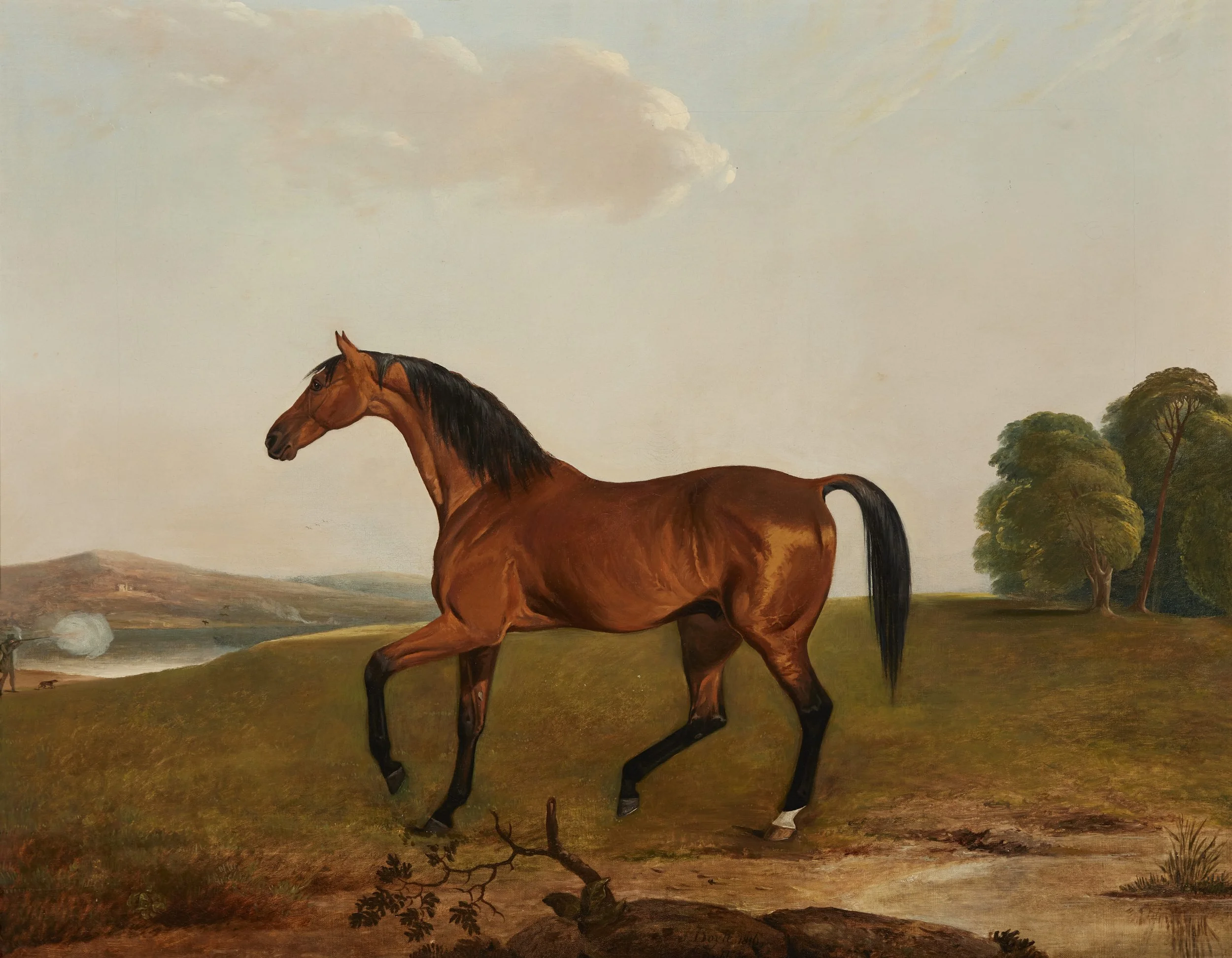
Chestnut Racehorse in a Landscape
Oil on Canvas, 71 x 91.5cm
Signed, inscribed Dublin, and Dated 1816
John Doyle was a Dublin-born painter and caricaturist whose early reputation was established through his paintings of horses. He entered the Dublin Society’s drawing school at an early age, winning a medal in 1805, and subsequently studied under the Italian landscape painter Gaspare Gabrielli and the miniature painter John Comerford. By the age of seventeen, Doyle was exhibiting equestrian portraits, showing three works with the Hibernian Society of Artists in 1814. He was subsequently represented at the Dublin Society’s exhibitions in Hawkins Street in 1815, 1817 and 1819, and at the Royal Arcade in 1821, where he exhibited a total of nineteen portraits of horses. These exhibitions marked a period of growing recognition for Doyle as a specialist painter of horses, with his work attracting the patronage of prominent figures including the Marquess of Sligo and Lord Talbot. It was during this formative Dublin period that the present work was created, being inscribed ‘Dublin 1816’.
The date places it at the heart of Doyle’s early rise as an equestrian painter, shortly after his first public exhibitions and before his move to London in 1821–22. In London, Doyle initially continued to work as a portrait painter and produced equestrian subjects, including The Life of a Race Horse series in 1822, before turning from 1827 towards the political caricatures for which he became famous under the pseudonym ‘H.B.’ He died in London in 1868 and was the grandfather of Sir Arthur Conan Doyle, the creator of Sherlock Holmes, through his son Charles Altamont Doyle. Doyle’s equestrian paintings are now particularly rare. Sally Mitchell, in The Dictionary of British Equestrian Artists (1985), describes the quality of his equestrian work as “most pleasing” and laments that so few examples survive. The present painting therefore represents a rare example of Doyle’s early work as an equestrian painter, produced during the period in which he was establishing his reputation in Dublin.
€ Enquire
Chestnut Racehorse in a Landscape
Oil on Canvas, 71 x 91.5cm
Signed, inscribed Dublin, and Dated 1816
John Doyle was a Dublin-born painter and caricaturist whose early reputation was established through his paintings of horses. He entered the Dublin Society’s drawing school at an early age, winning a medal in 1805, and subsequently studied under the Italian landscape painter Gaspare Gabrielli and the miniature painter John Comerford. By the age of seventeen, Doyle was exhibiting equestrian portraits, showing three works with the Hibernian Society of Artists in 1814. He was subsequently represented at the Dublin Society’s exhibitions in Hawkins Street in 1815, 1817 and 1819, and at the Royal Arcade in 1821, where he exhibited a total of nineteen portraits of horses. These exhibitions marked a period of growing recognition for Doyle as a specialist painter of horses, with his work attracting the patronage of prominent figures including the Marquess of Sligo and Lord Talbot. It was during this formative Dublin period that the present work was created, being inscribed ‘Dublin 1816’.
The date places it at the heart of Doyle’s early rise as an equestrian painter, shortly after his first public exhibitions and before his move to London in 1821–22. In London, Doyle initially continued to work as a portrait painter and produced equestrian subjects, including The Life of a Race Horse series in 1822, before turning from 1827 towards the political caricatures for which he became famous under the pseudonym ‘H.B.’ He died in London in 1868 and was the grandfather of Sir Arthur Conan Doyle, the creator of Sherlock Holmes, through his son Charles Altamont Doyle. Doyle’s equestrian paintings are now particularly rare. Sally Mitchell, in The Dictionary of British Equestrian Artists (1985), describes the quality of his equestrian work as “most pleasing” and laments that so few examples survive. The present painting therefore represents a rare example of Doyle’s early work as an equestrian painter, produced during the period in which he was establishing his reputation in Dublin.